If you run a small stockroom, workshop, trade unit or retail back room, it is easy to assume that any heavy storage system counts as racking. In practice, warehouse shelving and pallet racking solve different problems. Choosing the wrong one can waste floor space, slow down picking and make heavy items harder to handle safely.
This guide explains the practical difference between warehouse shelving and pallet racking for UK buyers, especially small businesses storing hand-loaded boxes, tools, parts and supplies.
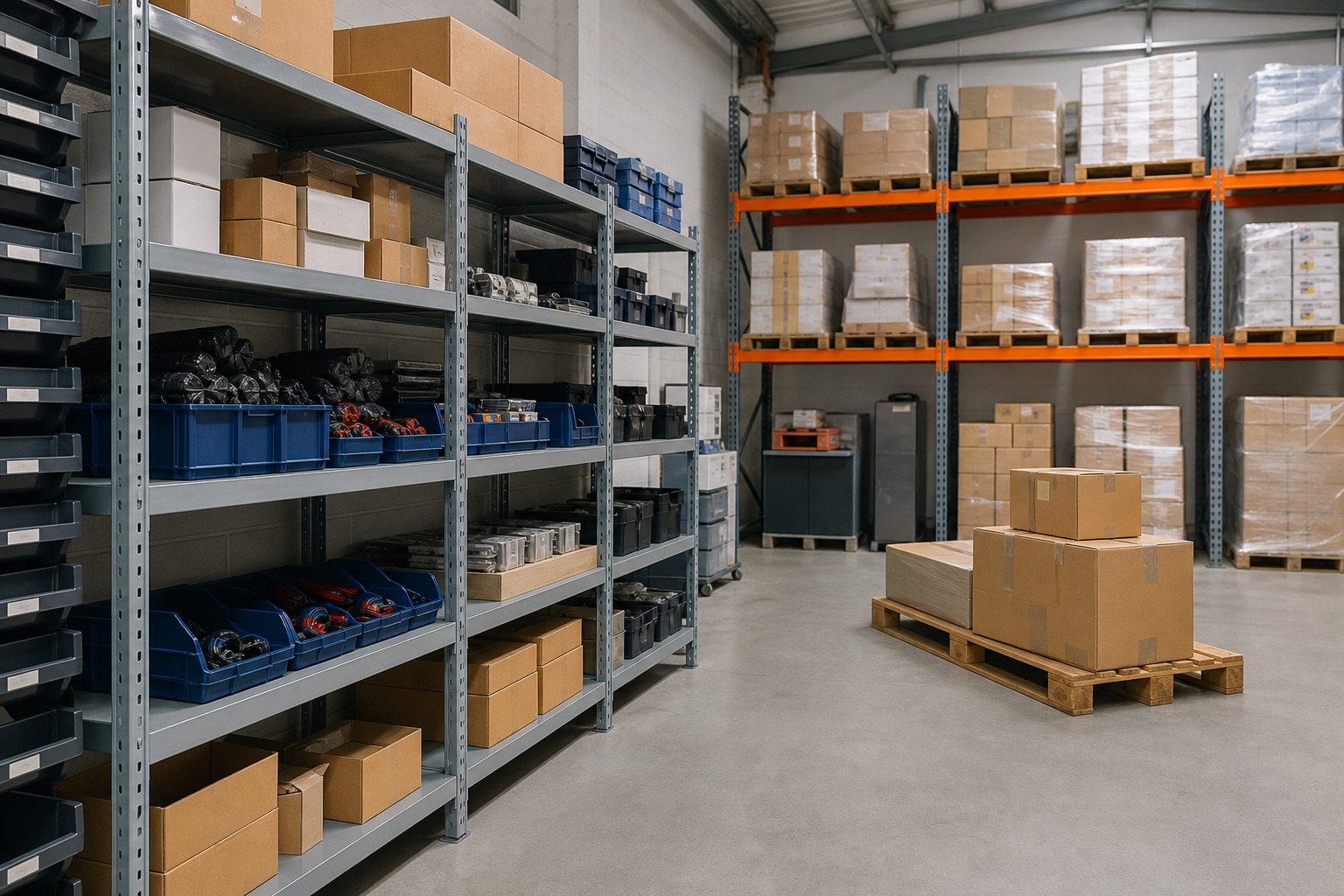
Quick answer: shelving for hand-loaded goods, pallet racking for pallets
Use warehouse shelving when items are loaded and picked by hand. Use pallet racking when goods stay on pallets and are moved with appropriate handling equipment such as forklifts or pallet trucks.
For many small UK stockrooms, warehouse shelving is the more practical first step because it supports cartons, parts, tools and packing supplies without requiring a full pallet handling setup.
What is warehouse shelving?
Warehouse shelving is designed for goods that people access directly. It is commonly used for:
- boxes and cartons
- workshop tools and components
- retail back room stock
- packing materials and small business supplies
- garage and trade unit storage
Heavy duty shelving usually has upright frames, beams and shelves made from steel, chipboard or another deck material. A buyer should check the shelf load rating, bay dimensions, shelf depth and how the load should be spread before ordering.
If you are comparing options, browse the RackingOutlet shop or see the heavy duty metal shelving 800kg capacity product page.
What is pallet racking?
Pallet racking is designed for palletised loads rather than loose cartons. It is normally used where stock arrives, moves and stores on pallets. The setup is more demanding because buyers need to consider aisle width, load notices, pallet weight, beam levels, floor condition and handling equipment.
Pallet racking can be the right choice for larger warehouses, but it may be more than a small stockroom needs if products are mostly hand picked.
When shelving is better for a small business stockroom
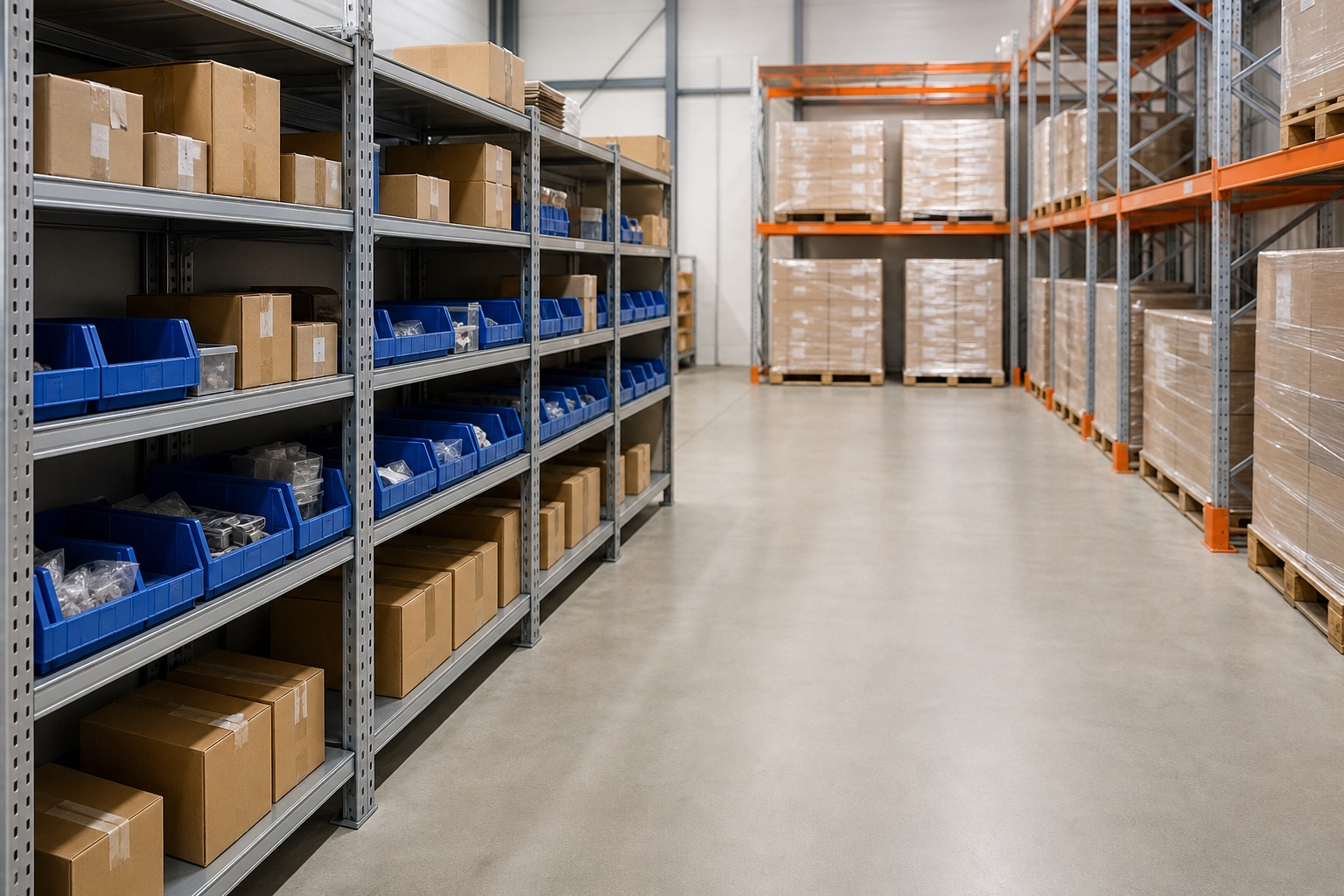
Warehouse shelving often suits a small business when staff need to see, pick and restock individual items quickly. It can work well in a retail back room, packing area, garage, workshop or trade counter where stock is handled in smaller quantities.
Shelving may be the better fit if:
- most items are picked by hand
- stock is stored in boxes, bins or containers
- you need adjustable shelf levels
- you want to improve floor space without installing pallet bays
- you do not use forklifts in the area
For a deeper buying overview, read our heavy duty shelving buying guide.
When pallet racking may be the safer choice
Pallet racking is usually worth considering when full pallets need to be stored above floor level. It may also be more suitable where goods are too heavy, bulky or frequent to handle manually.
Consider pallet racking if:
- goods arrive and leave on pallets
- you need forklift or pallet truck access
- the load per pallet is known and managed
- the site has enough aisle width and floor strength
- you need a formal racking layout for a warehouse operation
If the stockroom is small and goods are not palletised, heavy duty shelving is often the simpler starting point.
What to measure before choosing storage
Before buying either shelving or racking, measure the space properly. This helps avoid ordering a storage system that looks suitable online but does not fit the way people actually move around the area.
- Room width, depth and clear height
- Aisle space for staff, trolleys or pallet trucks
- Largest and heaviest boxes
- How many shelf levels you need
- Whether stock needs to be picked daily or stored long term
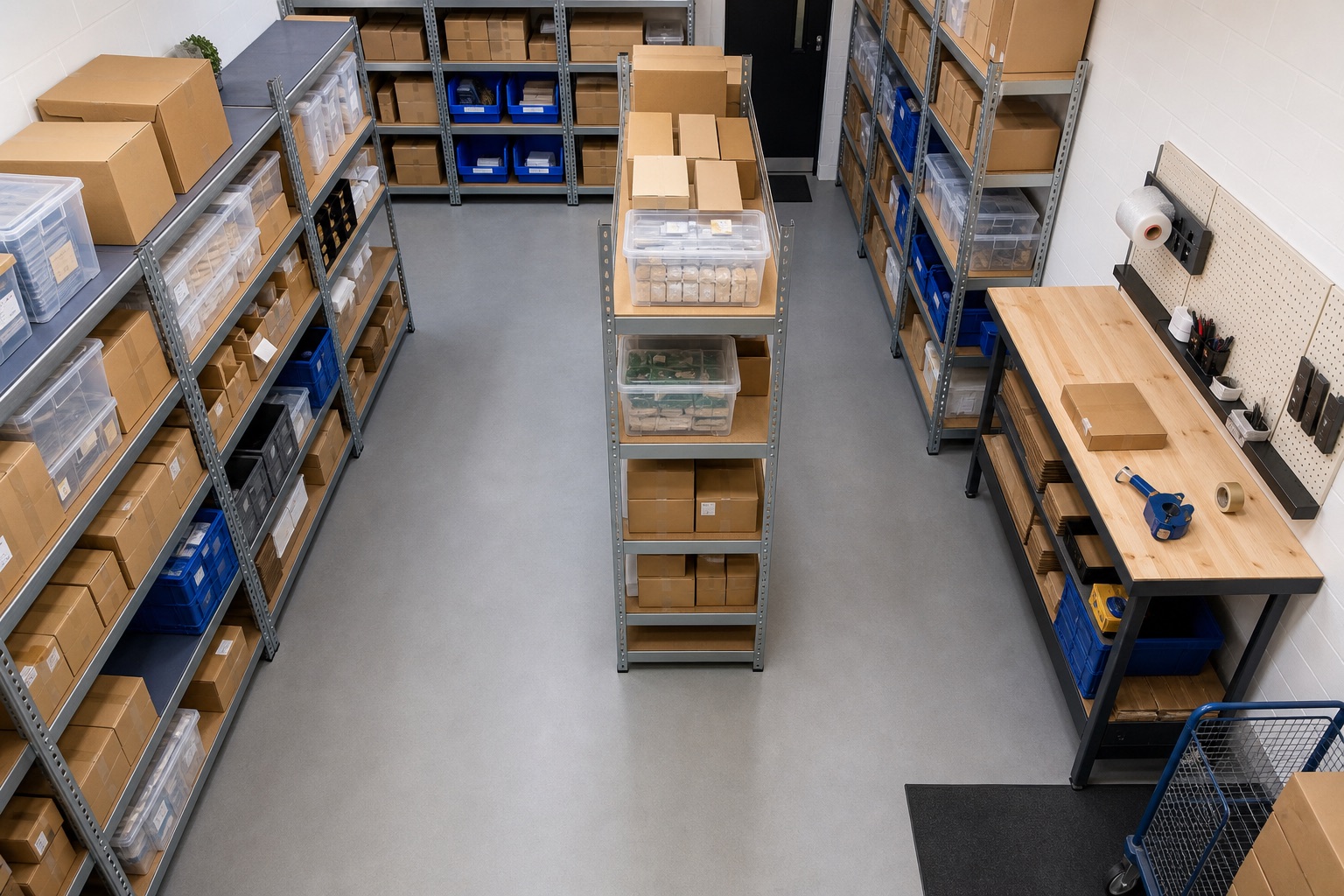
A simple way to decide
Use this as a starting rule:
- Loose boxes, tools, parts and hand-picked stock: choose heavy duty shelving.
- Full pallets, forklift handling and warehouse bulk loads: consider pallet racking.
- Mixed use: separate pallet storage from hand picking areas rather than forcing one system to do everything.
Many small businesses benefit from starting with a clear shelving layout, then upgrading to pallet racking only when the operation actually needs pallet storage.
Recommended next step
If your stock is hand-loaded, start by comparing heavy duty shelving sizes, shelf capacity and shelf depth. The 800kg heavy duty metal shelving unit is a useful reference point for buyers who need strong storage for boxes, tools and stockroom supplies.
If you are unsure what load ratings mean, read our guide to 800kg UDL shelving explained.
Message RackingOutlet on WhatsApp with your available space, stock type and approximate item weights before choosing a shelving setup.
Frequently asked questions
Is warehouse shelving the same as pallet racking?
No. Warehouse shelving is usually for hand-loaded goods such as boxes, tools and parts. Pallet racking is for palletised loads handled with suitable equipment.
Can shelving be used in a small warehouse?
Yes, shelving is often useful in small warehouses where goods are picked by hand. Buyers should still check load ratings, shelf depth and layout before ordering.
Is pallet racking always stronger than shelving?
Not in a simple like-for-like way. Pallet racking and shelving are designed for different load types. The right choice depends on whether goods are palletised, how they are handled and how weight is spread.
What is a pallet racking alternative for a small stockroom?
Heavy duty shelving can be a practical alternative when the stockroom stores hand-loaded boxes, tools, containers and smaller items rather than full pallets.